The AI for Good Global Summit 2026 was held in Geneva from July 7 to 10. During the summit, a special side event under the United Nations framework themed Integrating Networks and Intelligence, Advancing Open Source for Good — Ubiquitous, Open, Trustworthy and Inclusive was convened on July 9.
Co-hosted by the CAST UN Consultative Committee on Open Source and Innovation (CCOSI, hereinafter referred to as the Committee) and the Global Technology Association of InfoComm (GTI), the side event gathered representatives from international organizations, global telecom operators, universities, research institutes and industrial bodies. Participants conducted in-depth exchanges on topics including the deep integration of networks and artificial intelligence, AI safety governance, and the development of open-source ecosystems.
Professor Wang Jianmin, Chair of the Committee and Dean of the School of Software, Tsinghua University, delivered a keynote speech titled Open Source Promotes the Global AI Innovation at the special side event. On behalf of the Committee, Wang Jianmin called on all sectors across the world to uphold openness and collaboration, and jointly foster an inclusive, accessible and unified global open-source artificial intelligence ecosystem.
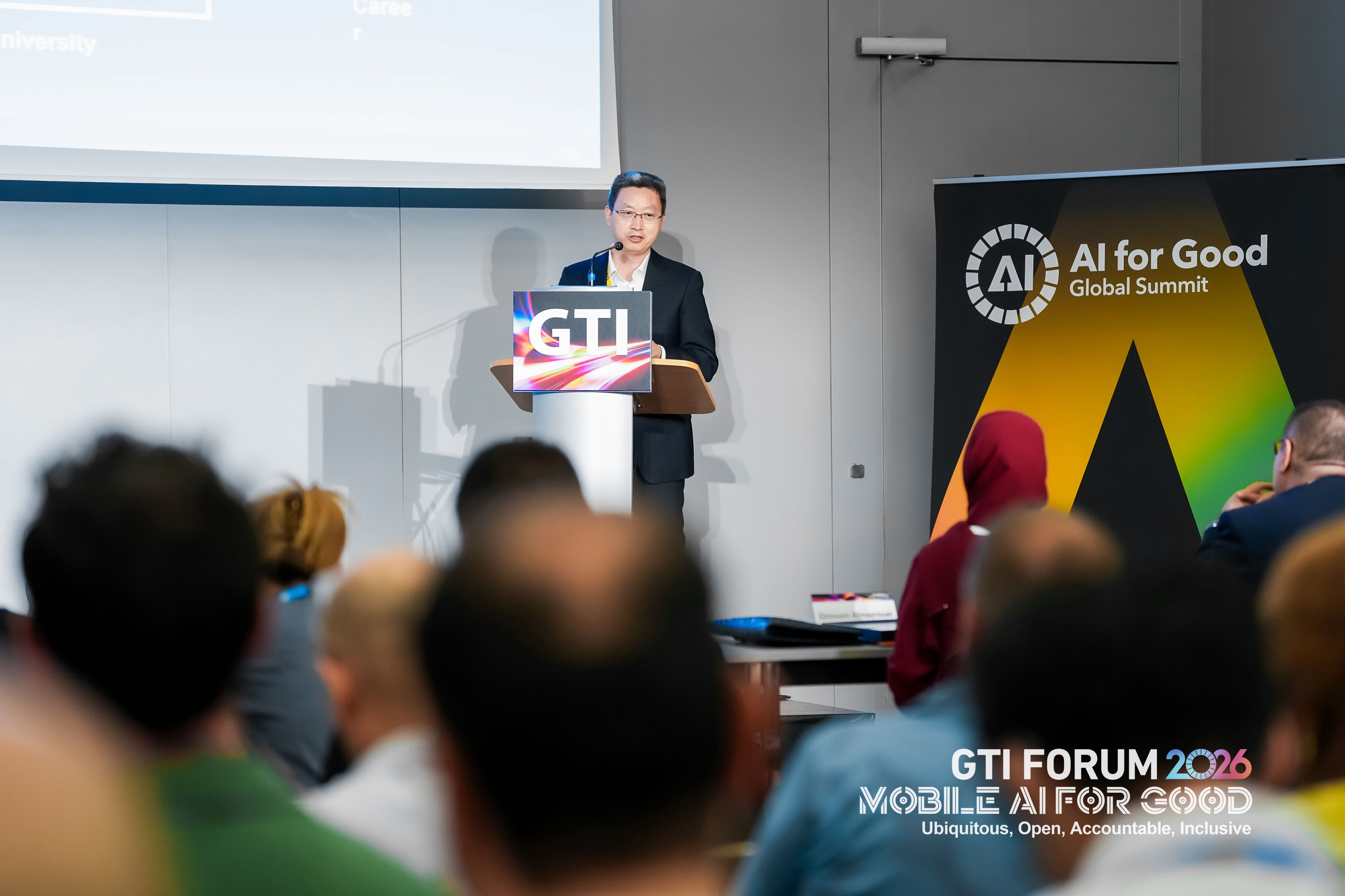
Wang Jianmin delivering a keynote report at the venue(Photo:ITU)
Drawing on his personal experience, Wang Jianmin elaborated profoundly on the core value of the open-source spirit in the AI era. He emphasized that open source serves as a critical engine for driving technological innovation, advancing inclusive access to technology and ensuring technological transparency. He shared his team’s practices in independently developing, promoting and deploying open-source projects such as Apache IoTDB, TsFile and Timer, vividly illustrating the multiplier effect of the open-source model in accelerating the transformation of technologies from laboratories to industrial applications.
Wang Jianmin further interpreted China’s position within the global open-source landscape from three dimensions. In terms of scale, China ranks third worldwide in both total developer population and active developers, possessing a large developer base and sustainably dynamic technical workforce in the global open-source community. In terms of contributions, China remains the world’s second-largest contributor to open source with considerable influence. Leading enterprises including Huawei and Alibaba stand high on global open-source contribution rankings. Shortly after its open-source release, DeepSeek-R1 developed by DeepSeek claimed the top spot in free download rankings on Apple’s App Stores in China and the United States within just one week. Products from Zhipu AI have served more than 70 countries and regions globally, clearly showing China’s deepening engagement and growing discourse power in the global open-source ecosystem. In terms of trends, innovative sub-sectors of open-source software are taking shape under a development pattern of “China-U.S. dual-core + multi-polar collaboration”. Lastly, Wang Jianmin stressed the importance of open-source governance and introduced an AI governance toolkit built upon the OpenDigger platform.